Resolving yt-dlp's HTTP Error 429 Too Many Requests
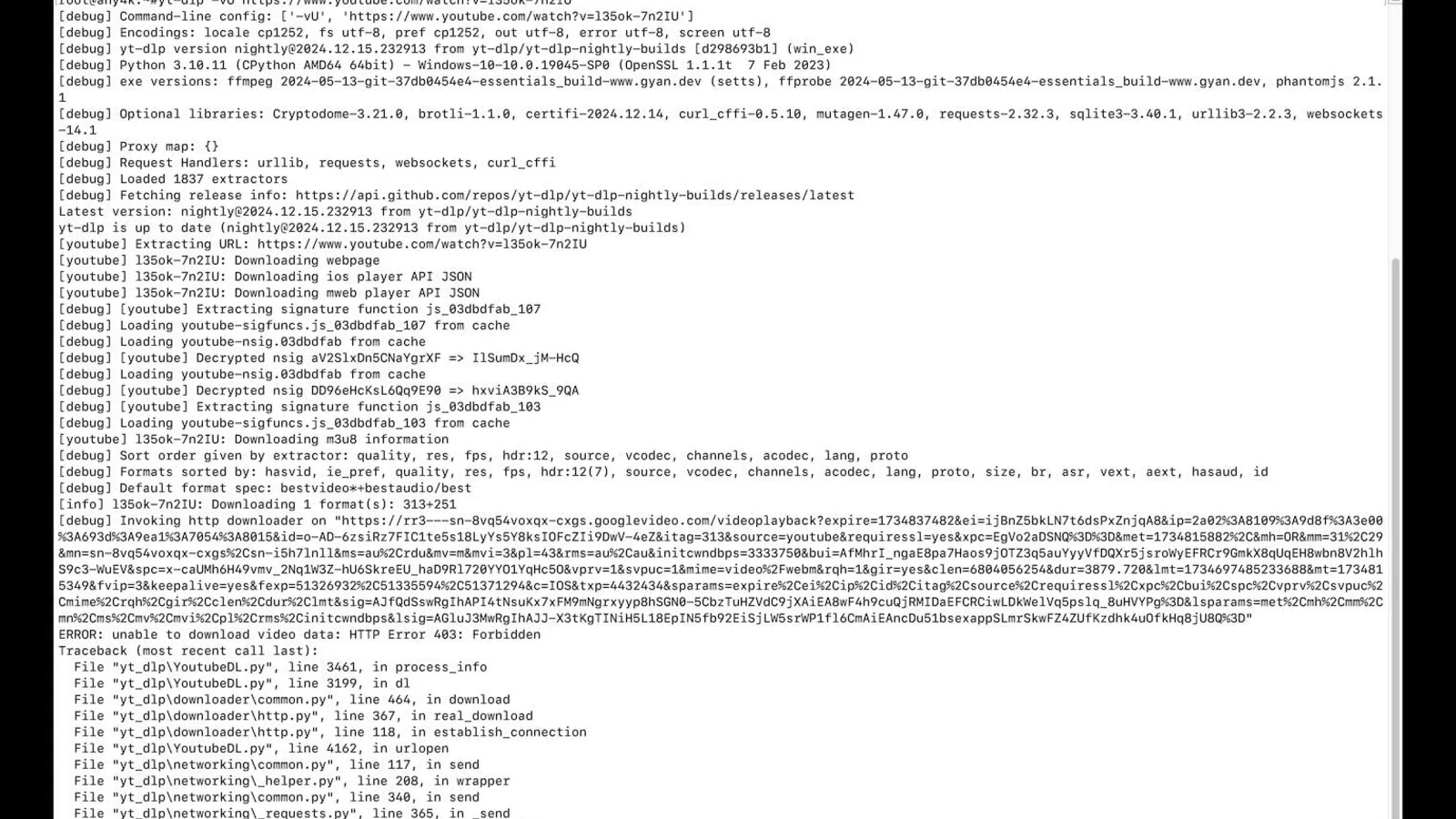
Understanding the yt-dlp HTTP Error 429
HTTP 429 Too Many Requests means YouTube has rate-limited your IP address. yt-dlp users see this most often after a batch download script tries to pull a playlist of 50+ videos back-to-back, or when a shared IP (university, office, VPN exit node) has already used up the request budget for that hour. Unlike 403, which usually points to a signature or token issue, 429 is purely about request frequency. The fix is either to wait, change IP, or stop sending so many requests so fast.
Why It Happens
YouTube enforces per-IP request quotas to protect against scraping. yt-dlp on default settings sends multiple requests per video (metadata fetch, signature decipher fetch, stream URL fetch, segment fetches). A playlist download multiplies that quickly. If you also have other YouTube tabs open in your browser using the same IP, you can hit the limit faster than expected.
Common triggers:
--yes-playliston a long playlist without--sleep-interval- Multiple yt-dlp processes running in parallel
- Shared NAT IPs (corporate, dorm, mobile carrier CGNAT)
- VPN exit nodes that other users are also hitting YouTube from
- Re-running a failed batch immediately instead of resuming
What You Can Try With yt-dlp
- Wait 1-6 hours. The rate limit resets on its own.
- Add
--sleep-interval 5 --max-sleep-interval 20to slow the cadence. - Add
--retries 10 --retry-sleep linear=10:300:30so retries back off. - Switch the network — phone hotspot, different VPN exit, home connection.
- Authenticate with
--cookiesfrom your browser; logged-in requests get a slightly higher quota.
None of these fully eliminate 429; they only reduce the chance of hitting it.
Using Any4K Instead
Any4K runs the parse server-side. Your IP is never the one talking to YouTube directly, so per-user rate limits do not apply the same way. For a single video or a handful of videos, just paste the URL at any4k.com and download. No sleep intervals to tune, no retry strategies to write.
Advantages of Any4K for Rate-Limit Situations
- No personal IP exposure: Any4K's infrastructure handles YouTube; you only download the finished file.
- Higher quality maxima: up to 8K when the source has it.
- Multi-platform: same UI for YouTube, TikTok, Twitter, Instagram, Facebook, Reddit, and Shorts.
- No install: opens in any browser.
When yt-dlp Is Still the Right Choice
Bulk archive jobs of hundreds of videos with subtitle extraction and metadata embedding are where yt-dlp shines. For those, accept that 429 is part of the workflow and tune the sleep intervals accordingly. For single videos or small batches, Any4K is faster end-to-end.
Conclusion
429 is not a bug — it is YouTube's traffic shaping. yt-dlp can be tuned to live with it, or you can sidestep the per-IP limit by using a server-side tool like Any4K Video Downloader.